Tesla intends to halve production costs: can they do it?
Tesla has announced plans to cut assembly costs by half in future generations of cars, according to engineers who briefed investors during the recent Tesla Investor Day.
Known for his bold vision, Tesla CEO Elon Musk told shareholders at Tesla’s 2023 Investor Day that his company plans to cut assembly costs by half in future generations of cars.
This announcement on March 1st sent shockwaves through electric vehicle enthusiast communities, with many wondering how this could be achieved.
The company’s engineers informed investors that they will achieve this decrease in cost through the use of innovative manufacturing methods and further streamlining their production process.
While details of the highly ambitious manufacturing plan are not available, here are our best guesses about how manufacturing costs of electric cars could be halved by Tesla.
Tesla recently stated its intention to build a new gigafactory in Mexico. This is likely to play a significant role in the company’s cost-cutting vision.
The new Tesla Production System, already at work in existing gigafactories, involves automating many of the processes that are traditionally done manually in car assembly, such as welding and painting. By automating more processes, Tesla may plan to reduce their labour costs significantly.
Another way Tesla can cut its assembly costs is through better design and material selection. By designing more efficient components, reducing the weight of the vehicle, and using lighter and more affordable materials, Tesla can reduce the cost of raw materials and production time.
Tesla can also reduce its assembly costs by improving its supply chain management. By better managing its inventory, reducing waste, and negotiating better prices with suppliers, Tesla could reduce the cost of purchasing parts for its vehicles.
Finally, Tesla can cut its assembly costs by increasingly utilizing new technologies such as 3D printing and virtual reality. 3D printing could allow Tesla to produce components quickly and cheaply, while virtual reality could help them to test out their designs before they go into production.

Post Malone Shatters RIAA Records with Diamond Sales

OPEC+ Makes Big Move Affecting Oil Price: 1.66 Million Barrels Per Day Cut

Selena Gomez Beauty Brand Soars: $1 Billion in Revenue by 2023

Joaquin Phoenix Faints On-Set, Ruins Take For Angry Director

Florence Pugh Employed Emotional Abuse for her Midsommar Role

Dogecoin Price Jumps After Elon Musk Swaps Twitter’s Bird Logo for a Dog
Renewable Energy Rises in Power but Remains Outpaced by Fossil Fuels
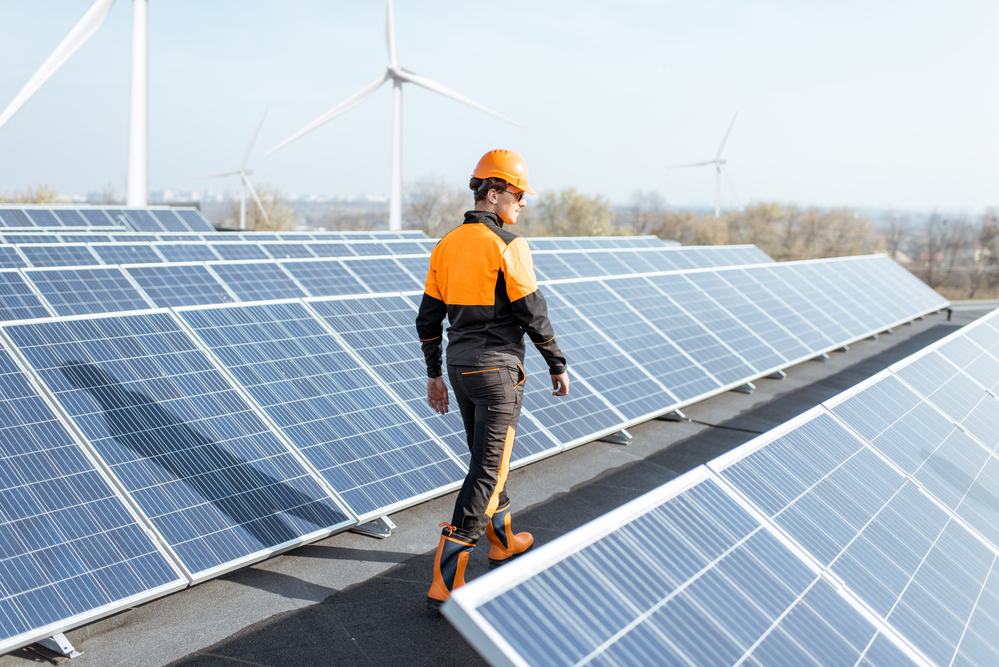
Although fossil fuels still dominate the world's electricity production, solar and wind power are gradually gaining ground.Published
4 years agoon
April 24, 2023By
David Berger
According to the “Global Electricity Review” report, published by the global energy think tank Ember, 12% of the world’s electricity was generated by solar and wind in 2022.
While this total is an all-time high, it should not obscure the fact that coal remains the leading source of electricity in the world today.
The report analyzes data from 78 countries, representing 93% of global electricity demand. It shows that renewables have seen a 40% increase in electricity generation since 2015. Wind and solar’s share of electricity generation has also increased by 19% over the same period.
However, coal remains the world’s leading source of electricity, accounting for 36% of global power generation in 2022. Natural gas comes in second, weighing in at 23% of total energy produced.
The continued use of gas and coal to meet the growing demand for electricity has resulted in increased greenhouse gas emissions. This has reached a new record level of 12 billion tons of CO2 equivalent in 2022 (a 1.3% increase compared to 2021).
The report also points out that some countries continue to have a heavy reliance on coal for power generation, such as China, India, Indonesia and South Africa.
The economic benefits of renewable energy are clear. The costs of producing wind and solar power have dropped significantly in recent years, making them an increasingly viable option for large-scale power generation.
Finally, the Global Electricity Review highlights the importance of continuing efforts to increase the share of renewable energy in electricity generation to reduce dependence on fossil fuels such as coal and gas and to meet global climate goals.
Gold Market Soars Amid Financial Turmoil
The price of gold is climbing at a rapid pace as the banking crisis continues to ripple through the financial markets and the inflationary climate worries investors.Published
4 years agoon
April 14, 2023By
David Berger
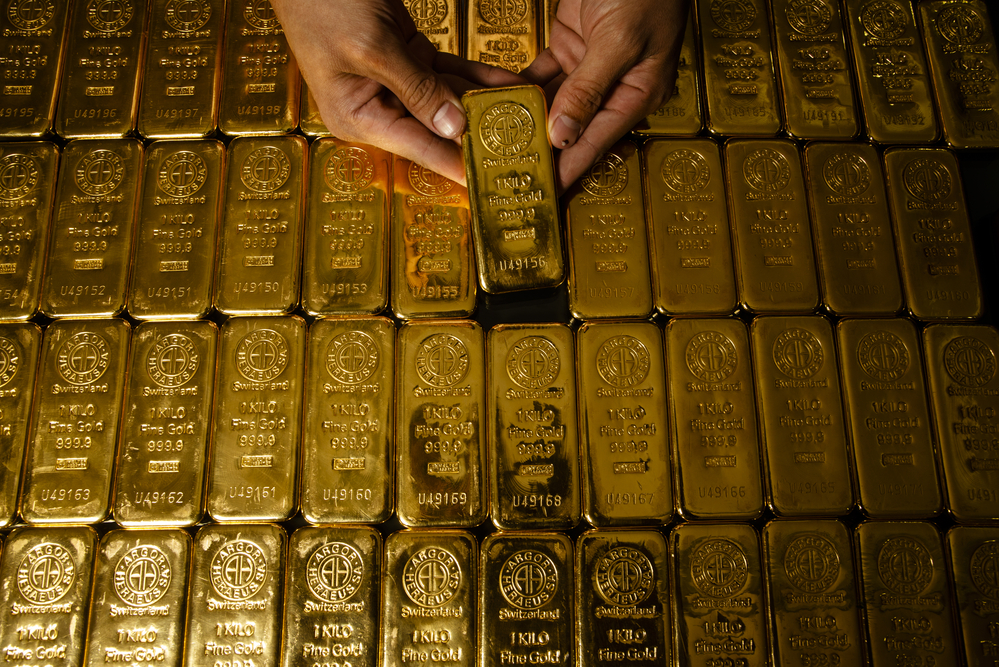
On Friday, April 7, gold prices rose more than 2%, representing the largest weekly increase in gold since November. This upward trend was driven by investors’ desire to hedge against economic instability due to the current banking crisis.
In 2022, central banks and other sovereign wealth funds bought 1,136 tons of gold, more than double the amount of the previous year. This rush to buy the yellow metal is the largest volume of gold purchased in 55 years. It has the effect of exploding global demand, which has reached 4,741 tons of gold in 2022, a figure that is 18% higher than in 2021.
The use of gold as a safe haven goes back thousands of years. Ancient civilizations already used the yellow metal as a medium of exchange and a store of wealth.
In modern times, gold has often been seen as a way to protect against inflation, currency fluctuations, stock market shocks, economic crises and geopolitical tensions. In times of crisis, gold was and still is often preferred to other forms of currency because of its portability and durability.
Its scarcity and difficulty of extraction make it a valuable and prized metal, giving it a high intrinsic value. Moreover, it does not degrade over time, unlike perishable commodities, and thus retains its value. This physical asset can be stored at home, unlike bonds and shares which are dematerialized and dependent on third parties, such as financial institutions.
Central banks have always been key players in the gold market as a safe haven
Finally, gold is not subject to the fluctuations of the financial markets, and thus, it mitigates the risk of financial losses in case of economic or political crisis. And unlike real estate, gold is easily traded and can be sold quickly. It is a scarce and tangible resource that cannot be artificially created like bonds, making it a stable and reliable asset.
These characteristics make gold a particularly popular safe haven in times of crisis for investors seeking security for their savings and protecting their portfolios from volatile equity markets.
This also explains why gold continues to be supported by central bank purchases, which see it as a means of diversifying their foreign exchange reserves in the face of current macroeconomic uncertainties.

Despite Brexit, London Still Leads in Tech Investment in Europe
With a total of nearly $20 billion, investment in London tech startups has surpassed that of other European cities.Published
4 years agoon
April 14, 2023By
David Berger
In 2022, $19.8 billion in venture capital was invested in London’s tech companies, $10 billion more than Paris and $14 billion more than Berlin, according to Dealroom and the nonprofit London & Partners, founded by former London Mayor Boris Johnson.
On a global scale, the UK is the third largest contributor to new technologies, behind the US and China.
Still, London’s investments have dropped significantly from the $27.5 billion raised in 2021. This decline is due to a general decrease in investment around the world due to rising interest rates and the disruption caused by Russia’s invasion of Ukraine.
In addition, the impact of the Brexit on London tech has been felt in the recruitment sector. The city is currently facing a talent shortage that limits its ability to evolve and grow. As it turns out, more and more young graduates are looking to cross the Atlantic to develop their skills in the US.
Despite this challenging economic environment, Laura Citron, managing director of London & Partners, said the City’s technology sector is resilient.
She added that London continues to be the technology hub of Europe and one of the best places in the world to grow an innovative business. The city’s strengths include its heritage in the finance sector, its economic dynamism embodied in a strong entrepreneurial community, a highly supportive regulatory environment for innovation and significant tax advantages for startups.
Dealroom analysts said the venture capital ecosystem in Europe is on the upswing, largely due to the large amounts of money that were raised before the recession.
Despite fears over the Brexit, London has not been dethroned by other European capitals like Amsterdam, Berlin or Paris as some experts predicted. Better still, the city should be able to retain its status as Europe’s technology capital for many years to come.